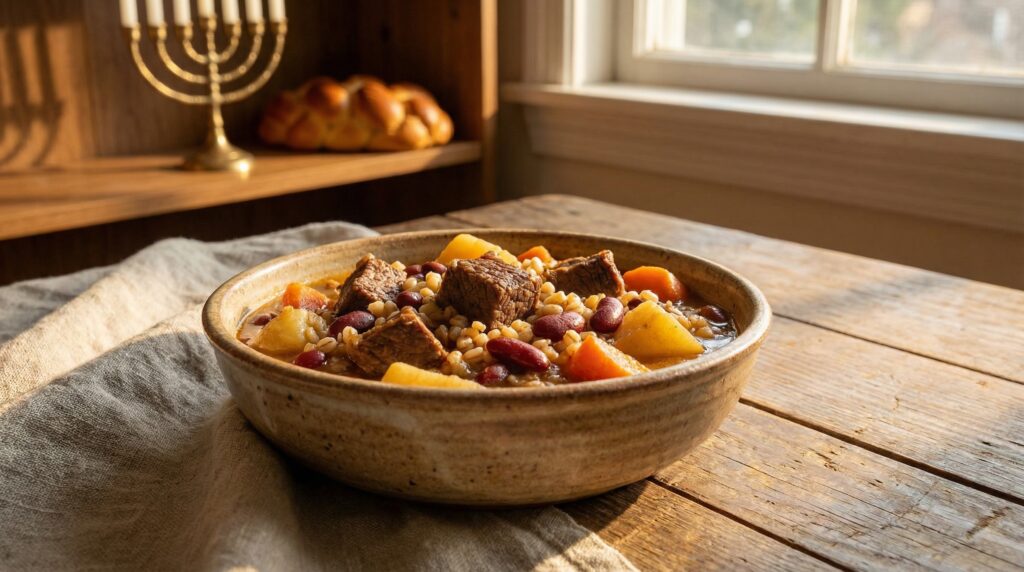

Traditional Ashkenazi Cholent Recipe

A hearty, slow-cooked stew with deep roots in Jewish tradition.
Explore the comforting flavors of cholent, a beloved Ashkenazi dish perfect for family gatherings.
Image illustrating:Traditional Ashkenazi Cholent Recipe
2
David Pliner
Culinary & Israeli Heritage Enthusiast
Discover the warmth of traditional Ashkenazi cholent, a slow-cooked delight perfect for family gatherings.

Health Benefits of Cholent

  • Rich in protein and fiber, cholent is a hearty meal that provides sustained energy.
  • The slow-cooked method preserves nutrients and enhances flavors.
  • Using a variety of vegetables adds essential vitamins and minerals.

Ingredients

Beef brisket
1.5 lbs
Potatoes
4 large, peeled and quartered
Carrots
3, sliced
Onions
2, chopped
Barley
1 cup
Kidney beans
1 cup, soaked overnight
Garlic cloves
4, minced
Beef stock
4 cups
Salt
1 tablespoon
Black pepper
1 teaspoon
Bay leaves
2
Paprika
1 tablespoon

Chef's Tips for Perfect Cholent

For a richer flavor, try browning the meat before adding it to the pot. This step enhances the stew's depth and adds a delightful caramelized note. Also, consider using smoked paprika for an extra layer of warmth.

Instructions

  • 1
    1
    Prepare the Ingredients
    Begin by soaking the kidney beans overnight. Drain and rinse them before use. Chop the onions, slice the carrots, and peel and quarter the potatoes. Mince the garlic cloves and set everything aside.
  • 2
    2
    Brown the Meat
    In a large pot, heat a bit of oil over medium heat. Add the beef brisket and brown it on all sides. This step adds a rich flavor to the stew. Once browned, remove the meat and set it aside.
  • 3
    3
    Sauté the Vegetables
    In the same pot, add the chopped onions and minced garlic. Sauté until the onions are translucent and fragrant. Add the sliced carrots and continue to cook for a few more minutes.
  • 4
    4
    Combine Ingredients
    Return the browned brisket to the pot. Add the soaked beans, barley, potatoes, and bay leaves. Pour in the beef stock and season with salt, black pepper, and paprika. Stir everything together to combine.
  • 5
    5
    Slow Cook the Cholent
    Bring the mixture to a boil, then reduce the heat to low. Cover the pot and let it simmer gently for at least 6 hours, or overnight if possible. This slow cooking process allows the flavors to meld beautifully.
  • 6
    6
    Check and Serve
    Before serving, check the seasoning and adjust if necessary. Remove the bay leaves. Serve the cholent hot, garnished with fresh herbs if desired. Enjoy the comforting flavors with family and friends.

The Rich History of Cholent

Cholent has been a staple in Jewish homes for centuries.

Originating in Eastern Europe, cholent is a dish deeply rooted in Jewish tradition. It was created to comply with religious laws prohibiting cooking on the Sabbath. Families would prepare the ingredients on Friday and let the dish cook slowly overnight, ready to be enjoyed on Saturday. This method not only adhered to religious practices but also enhanced the flavors, making cholent a beloved comfort food.
The ingredients of cholent vary widely, reflecting the diverse communities that have adopted it. In Eastern Europe, beans, barley, and potatoes were common, while Sephardic versions might include rice or chickpeas. Despite these variations, the essence of cholent remains the same: a hearty, nourishing meal that brings families together.
Cholent’s popularity spread as Jewish communities migrated, with each group adding its own twist. In Israel, cholent is known as ‘hamin’ and often includes eggs cooked in the stew. This adaptability has allowed cholent to remain a cherished dish across generations and continents.

Cholent is more than just a meal; it’s a symbol of community and tradition.

In modern times, cholent continues to be a centerpiece of Shabbat meals. Its preparation is a ritual in itself, with families gathering to chop vegetables and season the meat. The slow cooking process fills the home with a comforting aroma, creating an atmosphere of warmth and togetherness.
For many, cholent is a reminder of childhood and family gatherings. The dish’s rich flavors evoke memories of grandparents’ kitchens and festive occasions. It’s a taste of heritage that connects the past with the present, allowing each generation to experience the same comforting flavors.
Cholent’s enduring appeal lies in its simplicity and versatility. Whether enjoyed in a traditional setting or adapted to modern tastes, it remains a beloved dish that embodies the spirit of Jewish hospitality and warmth.

Cholent is a dish that brings people together, transcending cultural boundaries.

The communal aspect of cholent is evident in its preparation and sharing. It’s a dish that encourages gathering, conversation, and connection. Whether served at a family table or a community event, cholent fosters a sense of belonging and shared experience.
In many ways, cholent is a culinary bridge between past and present. It carries the flavors of history while adapting to contemporary tastes. This balance of tradition and innovation ensures that cholent remains a vital part of Jewish culinary heritage.
As we continue to celebrate and preserve our cultural traditions, cholent stands as a testament to the enduring power of food to unite and nourish. It’s a dish that tells a story, one of resilience, adaptation, and the joy of shared meals.

Related Recipes

FAQ

Why is cholent cooked overnight?
Cholent is traditionally cooked overnight to develop its rich flavors, making it perfect for Shabbat.
Can I use a slow cooker for cholent?
Yes, you can use a slow cooker to prepare cholent, allowing it to simmer gently over several hours.
What are the main ingredients in cholent?
Cholent typically includes beans, barley, potatoes, and meat, but vegetarian versions are also popular.