
Cherubim vs Seraphim: Exploring the Mystical Beings of the Hebrew Bible


In the quiet stillness of a Jerusalem morning, as the sun peeks over the ancient stone walls, a sense of wonder fills the air. It’s a feeling many of us have experienced when we think about the mysteries of the Bible and the spiritual beings that fill its pages. Among the most intriguing are the cherubim and seraphim—angelic figures that have inspired awe for generations. But what do we really know about them?
Cherubim and seraphim are more than just names in sacred texts—they are symbols of something deeper, something that connects us to the spiritual heritage of Israel. In this article, we’ll journey through ancient writings, explore interpretations from Jewish tradition, and reflect on how these beings continue to inspire us today.
Let’s begin by understanding what these beings are, where they appear in the Torah, and how they have been interpreted throughout Jewish history. Whether you’re new to these concepts or have studied them before, we hope this exploration brings you closer to the heart of Israel’s spiritual story.
The word ‘cherubim’ (כְּרוּבִים, keruvim in Hebrew) first appears in the Book of Genesis. After Adam and Eve are sent out of the Garden of Eden, cherubim are placed at the entrance to guard the way back to the Tree of Life. They are described as wielding a flaming sword that turns in every direction—a powerful image of protection and mystery.
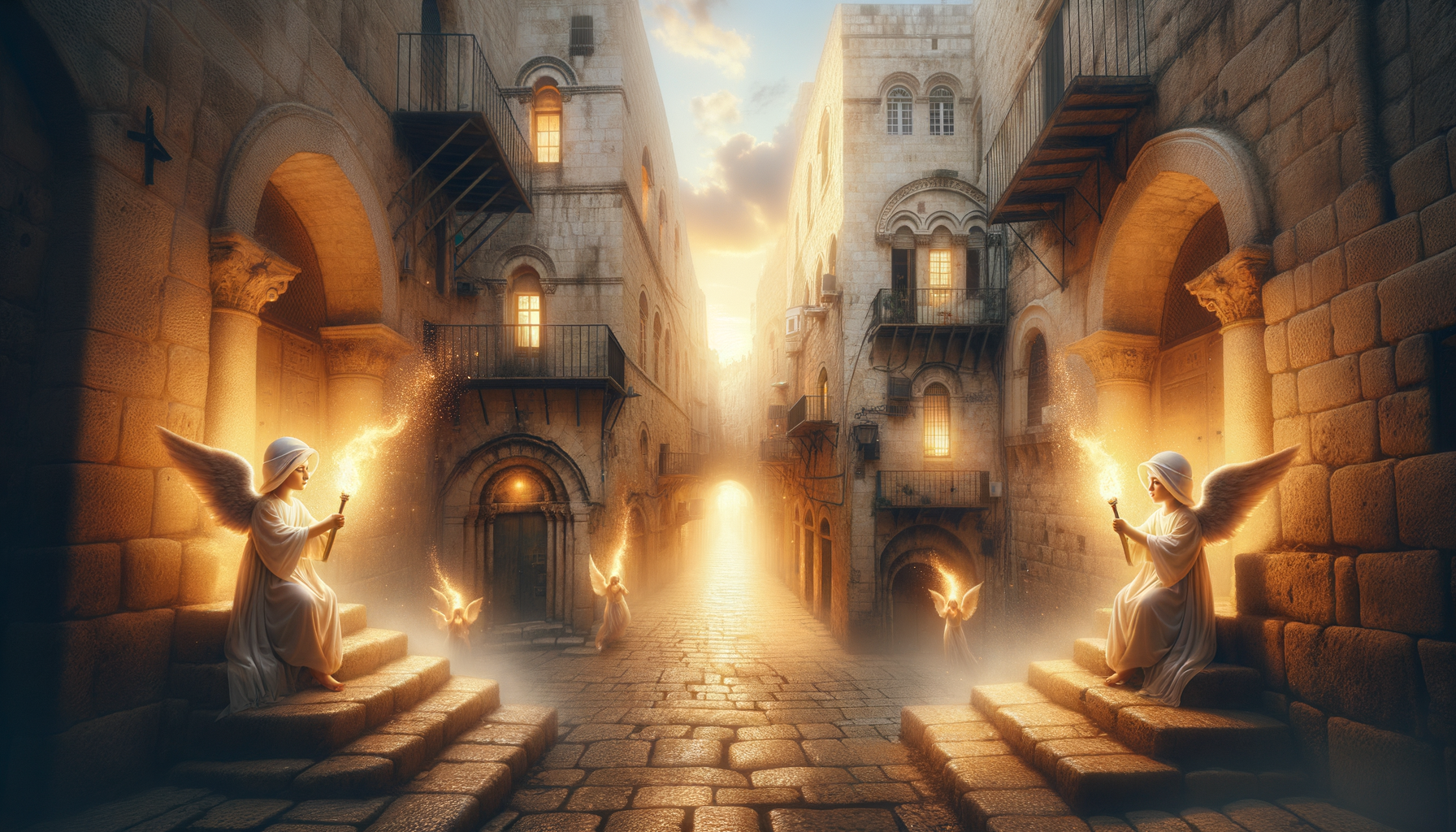
Later, in the Book of Exodus, cherubim appear again—this time as golden figures placed atop the Ark of the Covenant in the Holy of Holies. Their wings stretch toward each other, forming a space where the divine presence is said to dwell. These cherubim are not just decorative; they represent a sacred connection between the people of Israel and the divine.
The seraphim, on the other hand, are introduced in the Book of Isaiah. In a vision, the prophet sees seraphim standing above the divine throne, each with six wings. They call out to one another, proclaiming the holiness of the Creator. The word ‘seraphim’ comes from the Hebrew root ‘saraph’, meaning ‘to burn’, suggesting beings of fiery purity.
Unlike the cherubim, who are often associated with guarding and protecting, the seraphim are linked to worship and spiritual elevation. Their presence in Isaiah’s vision evokes a sense of awe and reverence, reminding us of the grandeur of the heavenly realm.
Understanding Cherubim and Seraphim in Jewish Tradition

